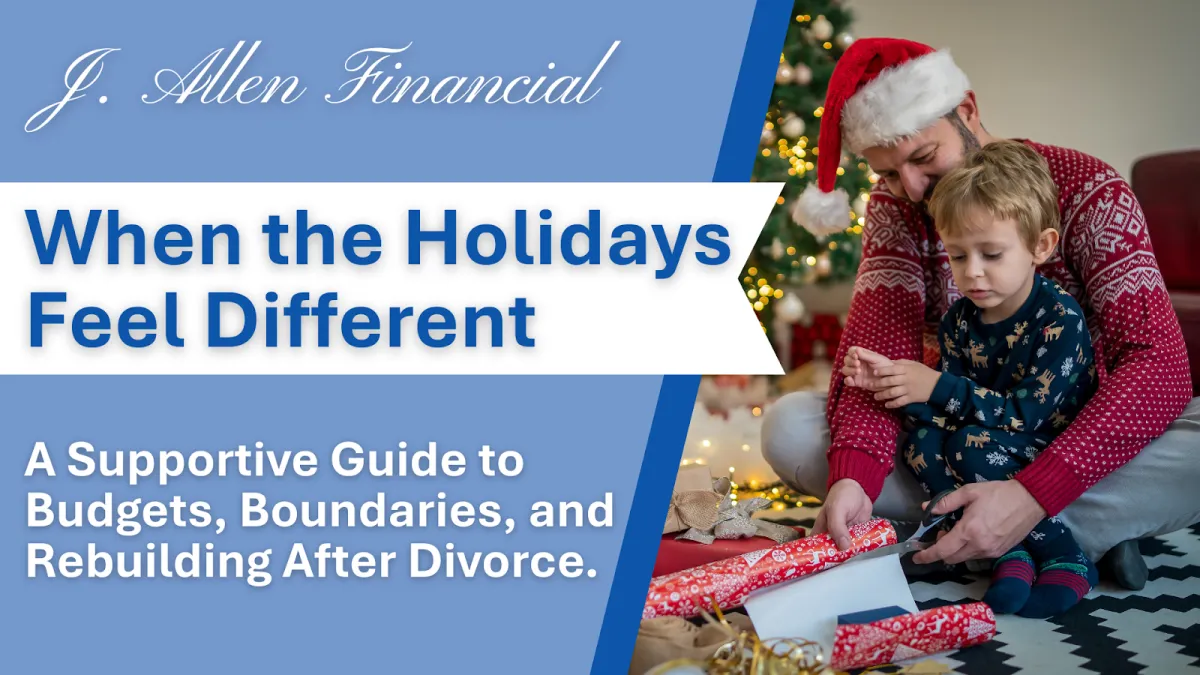
Divorced and Facing the Holidays? A Financial Survival Guide
By Judd Allen, CDFA® Candidate
The holidays can stir up a complicated mix of emotions when you're divorced. There's pressure to act like everything’s fine, even when it’s not. Old traditions might not make sense anymore. Schedules get complicated. Budgets feel tighter than ever. That magical season so many people look forward to might feel like a reminder of everything that’s changed.
If you're recently divorced, this might be your first time managing the holidays on your own. If it’s been a few years, you may still feel the weight of expectations that no longer fit your life. Either way, you’re not alone, and you’re not doing it wrong.
You don’t have to fix everything this year. What you can do is stay grounded, stay intentional, and protect both your wallet and your peace.
Redefine What Holiday Success Looks Like
Before divorce, success might’ve meant a full house, a matching set of pajamas for the whole family, and a pile of gifts under the tree. That picture may not be possible anymore. That’s not failure. That’s change.
Now, success might mean showing up calmly for your kids. It might mean choosing time with a few close friends instead of a big party. It could mean doing less and actually enjoying it more.
There’s no need to make up for the past with spending. Your kids, family, and friends don’t need you to impress them. They need you to be present, honest, and steady. That’s what sticks.
Build a Holiday Budget That Reflects Your Reality
If your income changed after divorce, or you're managing child support or spousal support, the math is different this year. That means your holiday spending needs to reflect what’s real, not what feels expected.
Start by adding up what you can actually afford to spend. Then list your seasonal expenses - gifts, food, travel, special outings, decorations. If the total exceeds your budget, adjust now. Not in January.
Spending within your limits isn’t about restriction. It’s about freedom. It’s about waking up in the new year without regret or credit card debt.
Let people know early if you're simplifying. Most will appreciate the honesty. The ones who don’t probably aren’t helping you move forward anyway.
Let Go of Comparison
Scrolling social media in December can feel like torture. People post pictures of happy families, cozy houses, ski trips, and oversized gifts. It’s easy to assume you’re behind, or that others have it figured out.
The truth is, most people are faking it a little. That couple you see posting matching sweaters might be drowning in debt or barely speaking to each other. That new partner your ex is showing off might not be as perfect as it looks.
Comparison is a trap that steals your energy. Stay focused on your own plan. Keep your values front and center. No one else’s highlight reel matters more than your progress.
Get Clear on Schedules and Expectations
Holiday custody schedules can get messy fast. Avoid confusion by confirming everything early. Talk through pickup and drop-off times, travel plans, and gift expectations.
Put it in writing. Use a co-parenting app if needed. The fewer assumptions made, the fewer arguments you’ll have.
If you're spending time alone this holiday, build a plan for that too. Decide where you want to be, who you want to see, and what you need emotionally and financially to take care of yourself.
Give Without Overspending
Guilt often leads divorced parents to overspend. It’s understandable. You want your kids to feel loved. You want them to look forward to being with you. You want to prove you’re doing okay.
What actually works is connection, not consumption. Kids remember baking cookies, watching movies, playing games, and just having your full attention. They don’t remember the price tag on a toy.
Adults in your life want the same thing. Thoughtful, personal gifts mean more than expensive ones. Take the pressure off yourself to wow anyone with your wallet.
Prepare for the Quiet Moments
Whether you share custody or you’re spending the holidays solo, quiet time can feel heavier this time of year. It’s tempting to distract yourself with shopping, scrolling, or overcommitting. That usually makes things worse.
Choose intentional rest. Go for a walk. Journal. Call a friend. Watch a favorite movie. Volunteer. Do something that fills you up instead of numbing you out.
The quiet moments give you space to breathe and reflect. That space is often where the healing starts.
Keep the Bigger Picture in Mind
Holiday spending has a way of derailing good intentions. That one last-minute gift turns into five. That dinner turns into a week of eating out. Suddenly, you’re back in debt and full of regret.
Staying focused now protects what you've been building all year. Maybe you’re paying off legal bills. Maybe you're rebuilding retirement accounts. Maybe you're just trying to stay steady. All of that progress is worth protecting.
If you're not sure how the season fits into your larger financial goals, talk with a financial advisor who understands what life looks like after divorce. One conversation could help you head into January with confidence.
Stay Present, Stay Grounded
This holiday won’t look like the ones before it. That’s okay. You don’t need to force joy, overspend, or act like nothing’s changed.
There’s value in choosing peace over pressure. There’s strength in simplicity. You’ve come through a lot this year. That deserves your respect.
If you're unsure, overwhelmed, or just trying to keep things from unraveling, start small. Take care of yourself. Stick to your plan. Ask for help when you need it.
This season won’t last forever. You’re getting stronger with each intentional step.
